
Re-examining the law of the sea and finding ways of worldmaking
Photography by Maurice Weiss/Ostkreutz
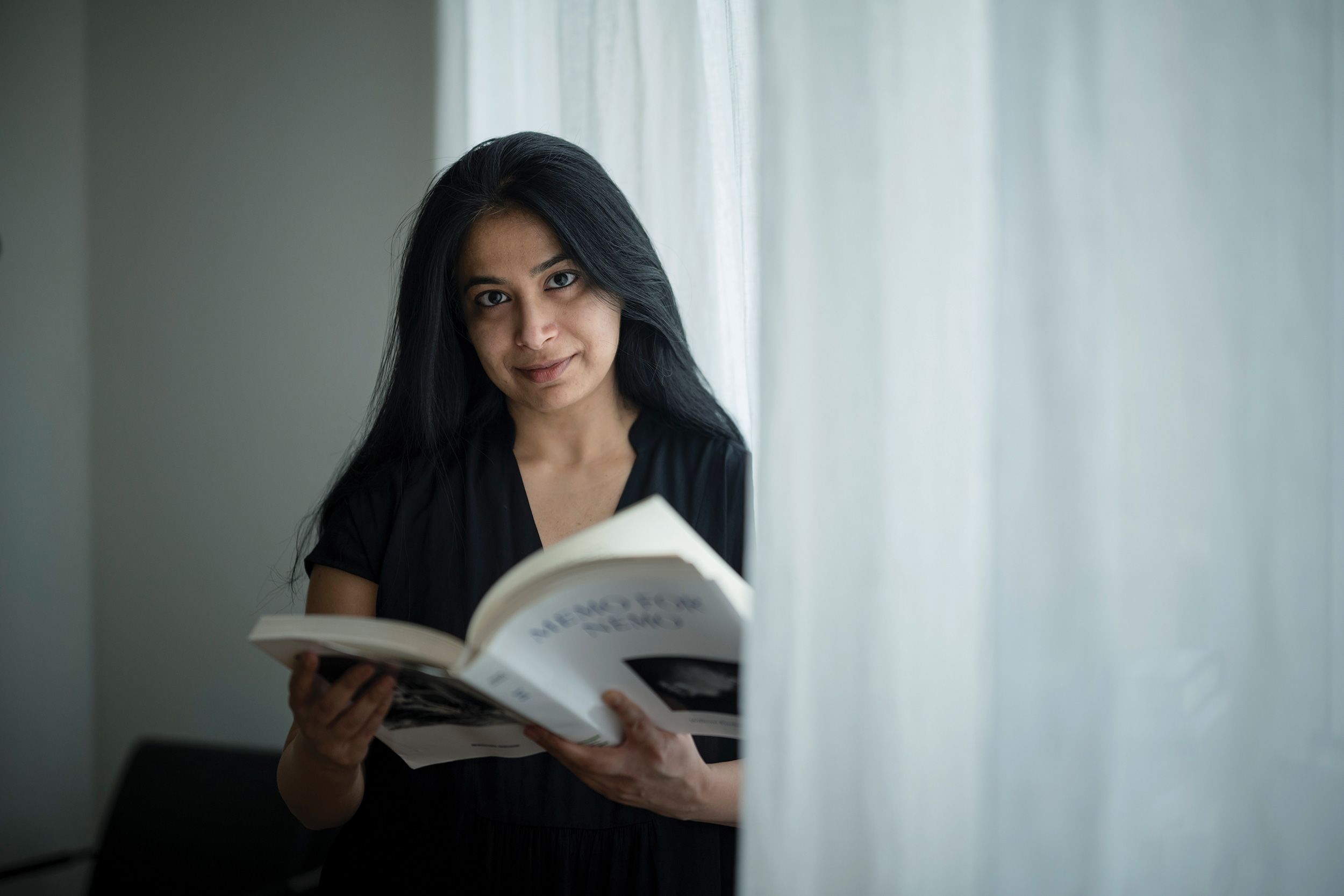

After being recognised with the Max Planck-Humboldt Research Award for her groundbreaking work on ocean governance, King’s Law Fellow Surabhi Ranganathan tells King’s Parade about her interdisciplinary approach and the new project she is launching with the research grant.
The Max Planck-Humboldt Research Award is a joint initiative of the Max Planck Society and the Alexander von Humboldt Foundation. According to its terms, it is given to ‘outstanding international researchers for their exceptional academic achievements’. It rotates annually between physical sciences and engineering, biological sciences and medicine, and the humanities and social sciences. I was awarded in the last of these categories, and received some personal prize money and a research grant of €1.5 million to set up a new project. Alongside, historian Jamie Kreiner (UCLA), and political scientist Prerna Singh (Brown) received Humboldt Medals and prize money.
Altogether then, three of the seven of us shortlisted for the Award were rewarded. The process was quite unusual. Our role as candidates really only began when we were contacted with the information that we had been shortlisted for the Award based on
nominations from the German academy. Thereafter, we were invited to submit a short proposal of what we would do with the Award money if we did win, and were invited to a colloquium to hear each other’s presentations, and an interview with the prize committee. We were also asked to identify German host institutions where we could base our projects.
I enjoyed the event, especially the unveiling of excellent projects by the assembled group. We had amongst us historians of science, transnational and global historians, medievalists, economists, political scientists, anthropologists, and of course me —
a lawyer. The interdisciplinary make-up of the shortlist and the awarding committee generated terrific questions, and thoughtful conversations around how we do our research. We stayed at the historic Harnack House in Berlin (I was assigned a room next to one that Rabindranath Tagore had once occupied!) and, formalities aside, enjoyed two convivial evenings.
I don’t quite know how I managed to win the Award, as there were so many deserving projects, and I hope they will find funding
to move forward. But I am delighted, of course, to be recognised in this way, and to be able to kick-off my project: Ways of
Worldmaking: Global South and the (Re)imagination of Global Ocean Governance.

What is the ocean? For whom is it the space of freedom, and for whom the site of extraction and immiseration?
The project — I really must find a good acronym for it as WoW!TheGSRaGOG doesn’t really sing — builds on a few observations. First, the perilous state of the ocean. It is not news that the ocean is warming, rising, acidifying, choking with plastic, depleting of biodiversity and potentially tipping over from a carbon sink to a source of emissions, as new ‘blue economy’ projects are lined up to carry on extracting its resources — marine
life and genetic material, fossil fuels, critical minerals, and more.
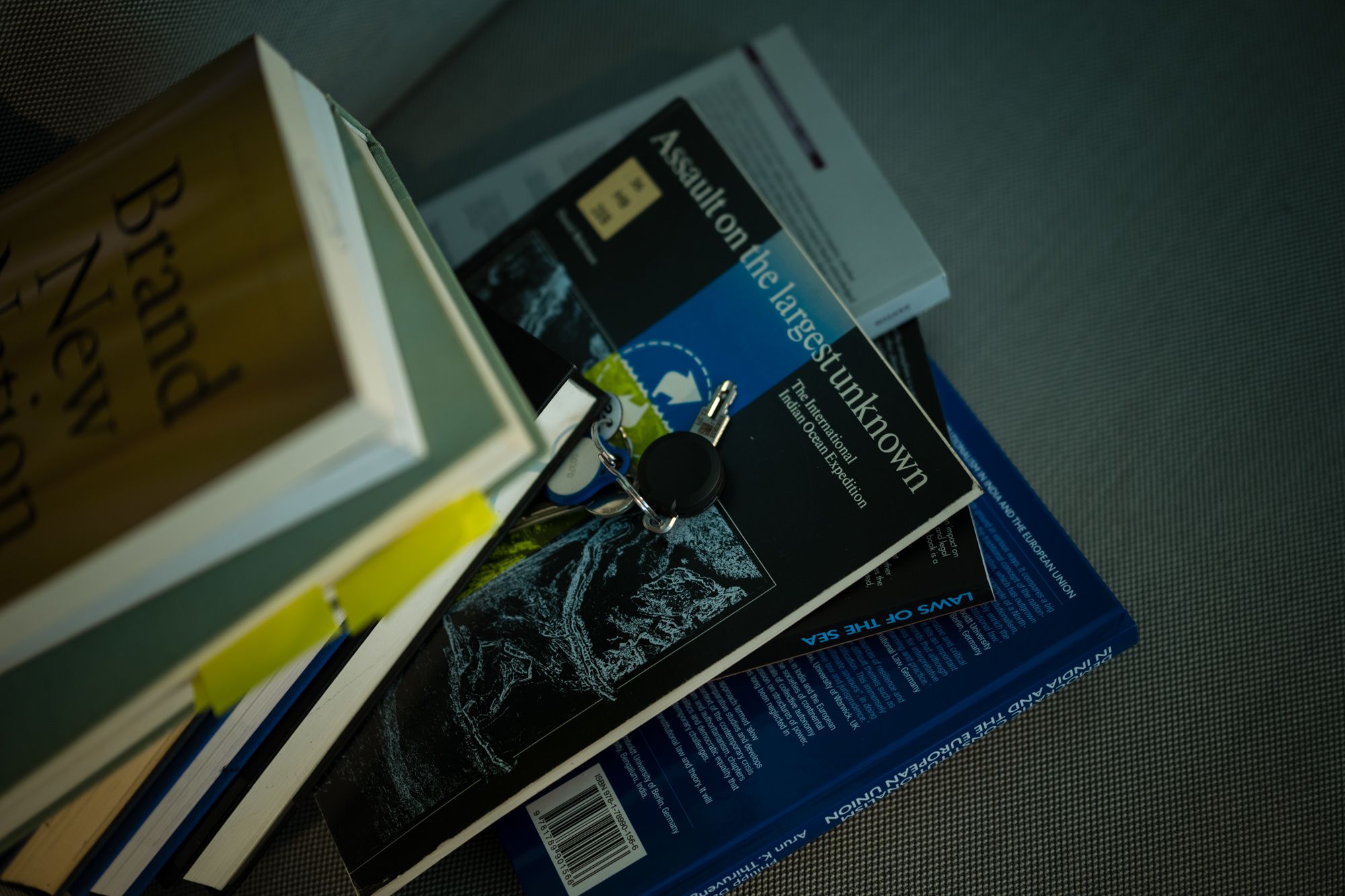
Second, importantly, none of this takes place in the absence of law, tempting as it might be to view the ocean as a ‘lawless’ space. In fact, there is a huge amount of ocean law, and even a ‘constitutional’ text — the UN Convention on the Law of the Sea.
It is thus necessary to understand how the law might have committed the sea to its current predicaments. It is also crucial to recognise that, as the perils have come to the fore, the law has gone into flux under the pressure both of efforts to intensify ocean exploitation, and to alleviate the impacts. There is now much jostling to define what will be(come) the law of the sea for
our times.
Third, in such a moment, we must attend to the blueprints, concepts, and ideas of those seeking to add different perspectives to the struggle to redefine ocean governance. The main commitment of the project, then, is to explore ‘worldmaking’, that is, the combination of intellection and practical political action, that is being undertaken by various ocean publics — collectives, movements, groups — as well as states and international institutions to give expression to the nature, and possible futures, of the ocean. With the intention of focusing on the Indian and Pacific oceans, the project will study worldmaking by actors from the Global South. This commitment is also methodological: for what, beyond bland statements of ‘inclusion’ of diverse views, does it really mean to study Southern worldmaking, and what it means for law and legal ordering? What does it mean to work with and learn from Southern worldmaking projects? And, what can we do to unsettle the formal doctrines and rules of recognition of
international law that have historically erased such projects?
This is all easier said than done, of course — not least, as international lawyers we cannot simply give up the commitment to abstraction (to the level of the global), as much as we also pursue contextual depth and sensitivity.These things are often in fundamental contradiction, yet of essence to any effort concerned with the articulation of rules and not ‘merely’ their critique.
In any event, I am placing my hopes on a planned combination of activities that go deep and that go broad — two approaches to studying the ocean itself! My research group in Berlin, including several post-doctoral researchers, will develop a creative online platform to amplify and champion examples of Southern worldmaking — this is the ‘going broad’ bit (readers, if you want to help build this, get in touch!). Alongside, we’ll deep dive into specific worldmaking contestations, thinking with the struggles to advance particular local visions of the ocean, the meanings of freedom and justice in the sea, and the shape of the future. I will focus on conflicting deep ocean projects in India; others on contexts in and around the Indo-Pacific.
Interdisciplinarity is absolutely key to the project, while not without its own challenges. A huge part of the problem has been the delinking, via formalism, of the legal imagination of the ocean from socially, politico-economically and historically differentiated imaginations, and of the doctrinal method from the study of context. The team needs people combining ‘internalist’ and ‘externalist’ perspectives on law, creative flair, and commitment (including methodological) to ocean justice, and the Global South.
Between now and next summer, when the project will launch, there is much planning to do. But soon we intend to be in the currents of Southern worldmaking, and what it implies for international law and ocean governance — and I can’t wait to get going!
Allow me to close with an invitation to read a short piece I published in The Dial magazine in May 2023. The article offers a tour of all that is being unmade in, and by, the law of the sea. Taking us from the straits of Singapore to deep dark hydrothermal vents, via fragile ports, sinking states, expanding shelves, islands of plastic, and submarine cables, it asks to think: What is the ocean? How do we know it? For whom is it the space of freedom, and for whom the site of extraction and immiseration? And, in this moment of crises, when everything seems in flux, what can we make of it?

 Built with Shorthand